Books and free reading material to support your healing between sessions, or on your own.
Dr. Aanchal is the author of two published books on mental health awareness, written to make psychology accessible and practical for everyday readers.
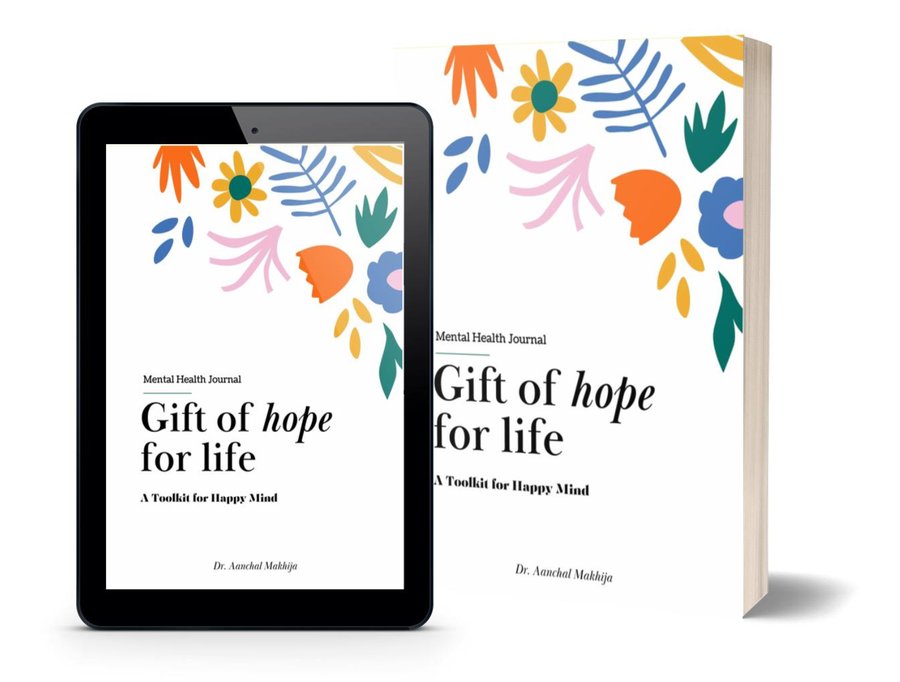
A Toolkit for a Happy Mind
A mental health journal built around real, everyday challenges: anxiety, self-esteem, self-doubt, depression and panic attacks. Each chapter pairs gentle explanation with journaling prompts, affirmations and meditation links to help you process what you're carrying and build lasting resilience.
Request to Buy
20 Quick Formulas for Mental Well-Being
A compact, practical companion for the days when you need grounding fast. Twenty simple, actionable formulas you can turn to anytime, anywhere, to steady your mind and get back to feeling like yourself.
Request to BuyShort reads on the topics that come up most in session, adapted from Dr. Aanchal's own journal, "Gift of Hope for Life."
That fluttery feeling in your stomach, the racing thoughts at night, the trouble waking up after a restless sleep: anxiety shows up in the body as much as the mind. A little nervousness is normal and even useful, it keeps us alert. But when it starts running the show, it's worth paying attention to. Naming what you're feeling, and writing it down, is often the first real step toward loosening its grip.
Depression is more than feeling low for a day or two. It's a heaviness that lingers for weeks, sometimes months, touching sleep, appetite, energy and how connected you feel to the people around you. The good news: it's treatable, and the earlier it's named and addressed, the gentler the road back tends to be. Getting a proper diagnosis is always the right first move.
Fear is a belief before it's a feeling: a strong, sometimes irrational conviction that we're in danger. Some fears keep us safe. Others quietly shrink our lives, making us avoid things we'd otherwise want to do. The first step isn't fighting fear, it's acknowledging it clearly enough to understand where it actually came from.
These two get tangled up often, but they're not the same. Self-worth is your sense of your own value, independent of achievement. Self-confidence is belief in your ability to do something well. You can have high self-worth and still feel shaky confidence in a specific area, and that's completely normal. Building either one starts with small, repeated acts of showing up for yourself.
Our minds process tens of thousands of thoughts a day, so a bit of overthinking is inevitable. It becomes a problem when it drains your energy instead of helping you plan. Often it comes down to wanting control, fearing mistakes, or perfectionism. Noticing the pattern, and gently interrupting it, matters more than trying to force the thoughts to stop.
Doing consistently good work, getting genuine praise, and still feeling like a fraud waiting to be found out: that's imposter syndrome, and it's far more common than people admit. An occasional flicker of it is normal. The persistent belief that "I'm not capable," despite real evidence otherwise, is worth exploring rather than carrying alone.
Want the full journal, with journaling prompts, affirmations and guided exercises for each topic? Request a copy above.